Engineers: Help or Hindrance?

Engineers need to get on board with collaborating, but we also need to get on board with the idea of being encouraging and supporting in the way we provide our feedback.

LinkedIn is almost compulsory if you work in the engineering consultancy space. So, most days begin with catching up on notifications, messages, invitations and the latest articles in the feed.

As the feed is driven by an algorithm that interprets your interests and searches among your contacts, my current feed is dominated by engineering commentary on the energy transition. This commentary ranges from people promoting their products and companies to people contributing their ideas as comments.

Why so negative?

It troubles me that the majority of comments are critical. Coupled with the lunatic fringe commentary that the energy transition attracts, it is not often a positive start to the day. This leads to periods of silence on my part as I struggle with the negativity on such an important topic.

I understand the need engineers feel to point out the physics and the resultant impact on costs and practicality, because I am an engineer. I admire the insight that is often provided, but I wish it could be framed more positively.

Collaboration

If we are to make faster progress with the energy transition, we have to start collaborating on a grand scale rather than trying to make progress or provide commentary as individuals or individual companies. This should be the role of government, but political ideology and the lobbying of vested interests is not a good basis for encouraging collaboration between competitor companies, industries and indeed ideologies.

Indeed, most government activity seems to be framing the transition as a race between countries, states and political parties to be the renewable superpower of the future. This followed by throwing their weight behind technologies that have been well promoted but poorly analysed. No wonder engineers are scandalised.

I have become involved in four different forums related to energy transition and my current mission is to help bring all those forums together to produce said collaboration. One of the forums is an engineering forum.

When I first suggested the collaboration with engineers in another forum the response was immediate: ‘we don’t want engineers involved, they will just over specify everything’. This felt a bit like an episode of ‘Utopia‘, faced with the largest number of engineering projects ever, engineers were not wanted for input.

The people making these remarks had no clue what engineering really involves, they were just so used to promoting concepts to executives and boards that they weren’t used to thinking in practical terms.

However, when considered in the light of my comments about the commentary on LinkedIn, perhaps they had a point?

Which leads me to conclude, engineers not only need to get on board with collaborating, but we also need to get on board with the idea of being encouraging and supporting in the way we provide our feedback.

But whatever you do, don’t reply to comments from the lunatic fringe on social media. It only encourages them and further depresses me!
Will We Ever Learn?

Any fool can add, the genius eliminates, substitutes, minimises or simplifies.

Doctor Jane Goodall, famed conservationist, describes the COVID-19 pandemic as inevitable given human disregard for nature.

HIV, SARS and MERS were warning signs, yet we made no major effort to address the danger of virus jumps between species and were unprepared when the pandemic hit.

Politicians will try and apportion blame away from themselves, but blame does not address our collective responsibility for each other and our companion species.

For the first time in the age of technology, we have a major impact that is not limited to non OECD countries or another species. We are forced to take notice of the consequence of our collective activities.

Perhaps the greatest benefit of digital technology is increased enlightenment. It is no longer possible to hide from the impact the human species has on the planet. Jane Goodall is perfectly correct as she points to the pandemic as an example of our impact.

Subsequent global calls for an inquiry seem a little late, when the opportunity to decrease the chances of inter species transmission was missed.

The highlight of the response to the pandemic has been the collective action to change  behaviour in order to protect the vulnerable.

Yes, there has been an entitled minority that believe their self interest trumps the interests of the vulnerable, but that is a comment on those people not humanity in general.

For once, the common refrain was ‘we are all in this together’.

Warning Signs

Rather than add to the media noise about the pandemic; what other warning signs should we be responding to?

Climate change is the obvious candidate.

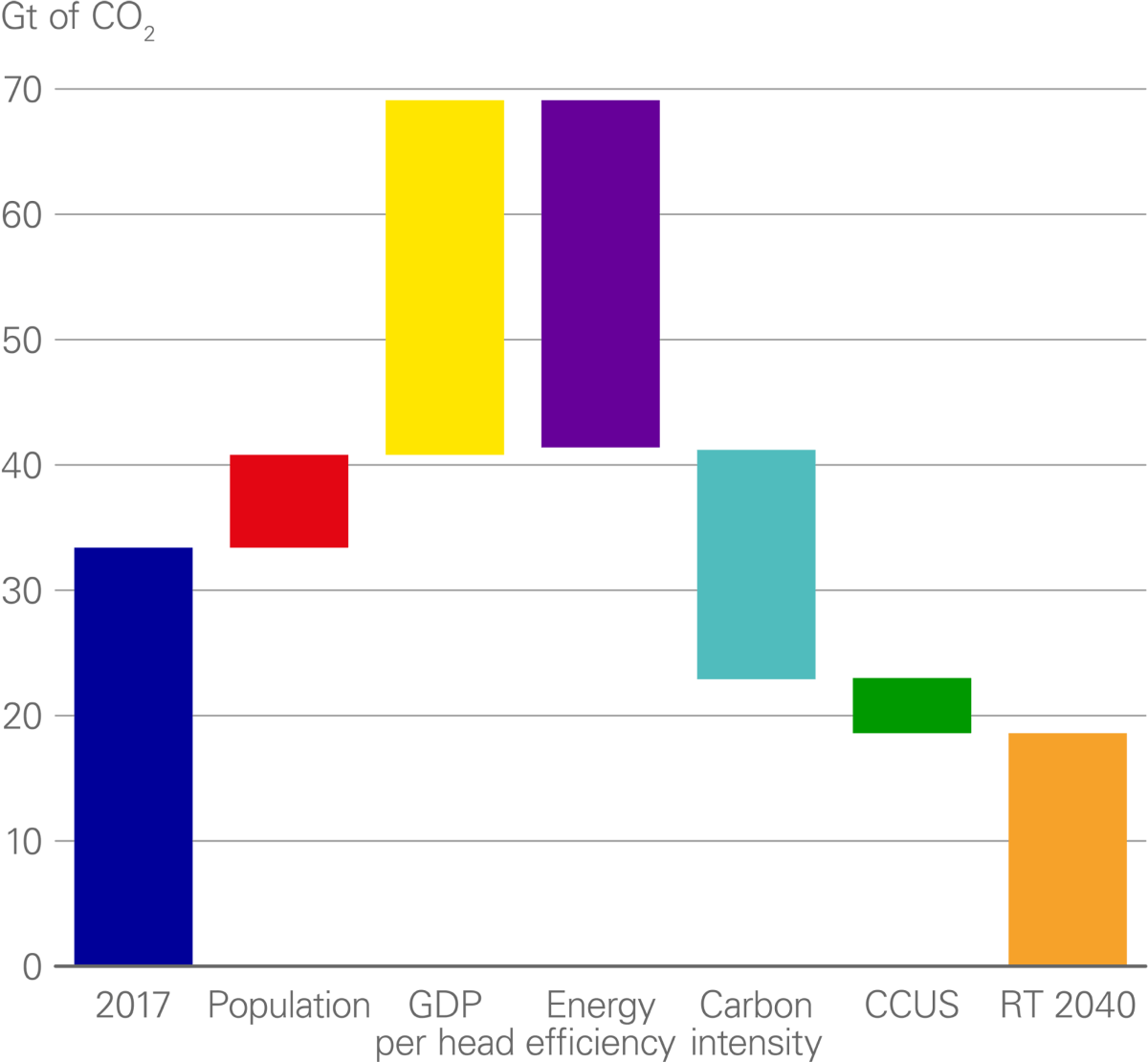
Whilst many people would say we are not responding fast enough, we are responding. Growth in renewable energy continues and we are increasingly efficient in the way we use energy.

However, growth in demand for energy means the growth in renewable energy and increasing efficiency is insufficient to reverse the trend of increasing global emissions.

It is naïve to expect to limit growth, even if the truth of the matter is that the growth of the human race is the greatest existential threat of all. Similarly, there is an alternative path that grows nuclear power alongside renewable power to decarbonise power generation, but that path is not socially acceptable either.

The infinite consumption of finite resources is not sustainable. We have to transition our sources of energy and we have to increase efficiency.

We must therefore do all we can to accelerate renewable energy and increased efficiency. Electric cars and autonomous driving are a part of this efficiency drive.

Renewable energy growth is in hand, and despite resistance from self interest will only accelerate in coming years as there is now a corporate and increasing political imperative to transition our energy sources whilst reducing emissions.

Reading the annual statements of energy companies demonstrates they are alive to the challenge of decarbonising our consumption of energy. Self interest in heavy fossil fuels without emissions reduction is in rapid decline, whilst interest in electrification, carbon sequestration and transition is in the ascendency.

Increased Efficiency

We can decouple our growth from finite resources if we transition enough of our energy consumption to renewable sources and above all we improve our efficiency. We learn to use less as we do more.

Efficiency is an attitude. It is a state of mind. The infinite consumption of finite resources is not a political problem, it is a problem that each of us is responsible for.

How much do you recycle today compared to earlier years of your life? Which bin has the most waste in it? So, we can make a personal difference.

If we apply the same approach to our use of resources in general the world will be a more efficient place. An efficient world is a cleaner world. A cleaner world is a healthier world.

There are four key words that help us be more efficient in everything we do. They are the four key words that are involved in doing more with less. We first came across the key words in the realm of safety. The concept was that wasn’t isn’t there can’t hurt you. R.I.P. Trevor Kletz.

Those four key words are: ELIMINATE, SUBSTITUTE, MINIMISE and SIMPLIFY.

Another way of saying the same thing is ‘Any fool can add, the genius eliminates, substitutes, minimises or simplifies’.

Life, and our impact on the planet, will only get more complicated if we continue to add. If our solution to every problem is to add something we will inevitably run out of resources to do everything we want to do.

If we respond to problems by eliminating, substituting, minimising or simplifying we won’t run out of resources because our demands will reduce even though we are achieving more.

These principles apply in all aspects of life. They apply at a domestic level and they apply in the work environment. You can’t be two people. If you are wasteful at home you will be wasteful at work. Every improvement and self development credo in the world is based on the principles of efficiency. Getting more by doing less.

There will be times when we have to add. If we have to add it usually indicates opportunity. Other people who want the same thing will also need the answer if there is no other way (eliminate, substitute, minimise or simplify) to achieve it.

Doing more with less footprint must become our credo as a species.